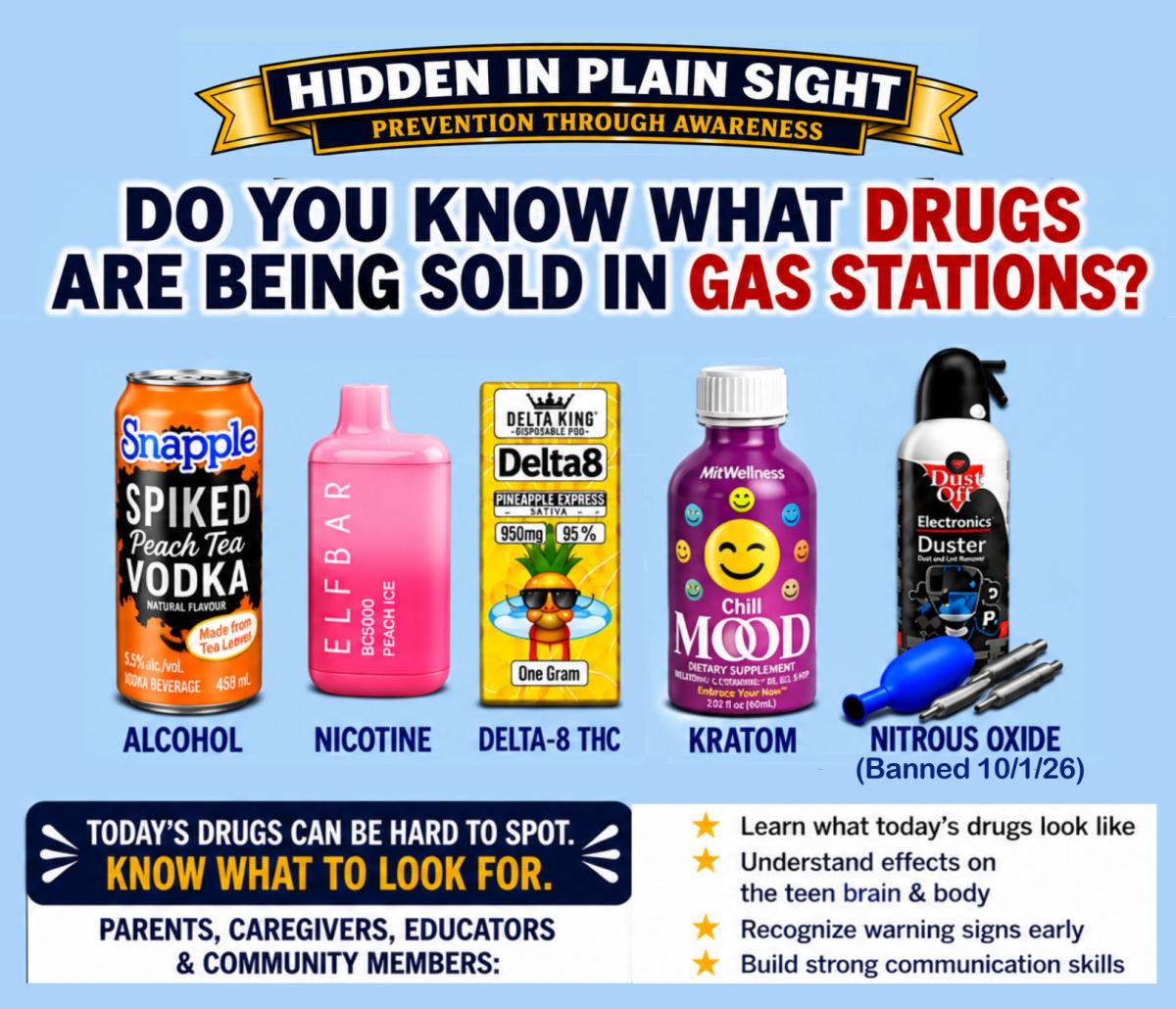
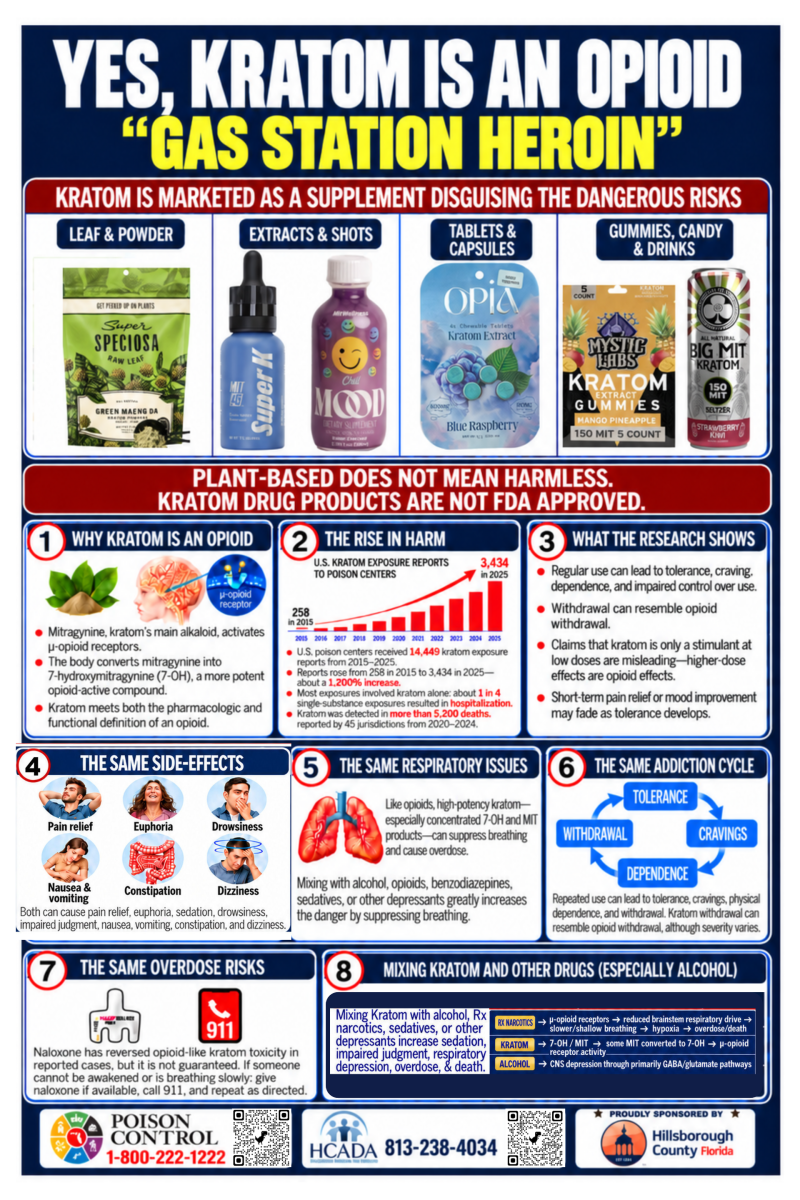
Kratom products, sold at gas stations, have found allies in Washington DC. slid But health experts warn it is an addictive opioid, fueling increasing outrage that it remains legal in most states.
Home
THC Potency Has Changed. The Risks Are Higher & Real. 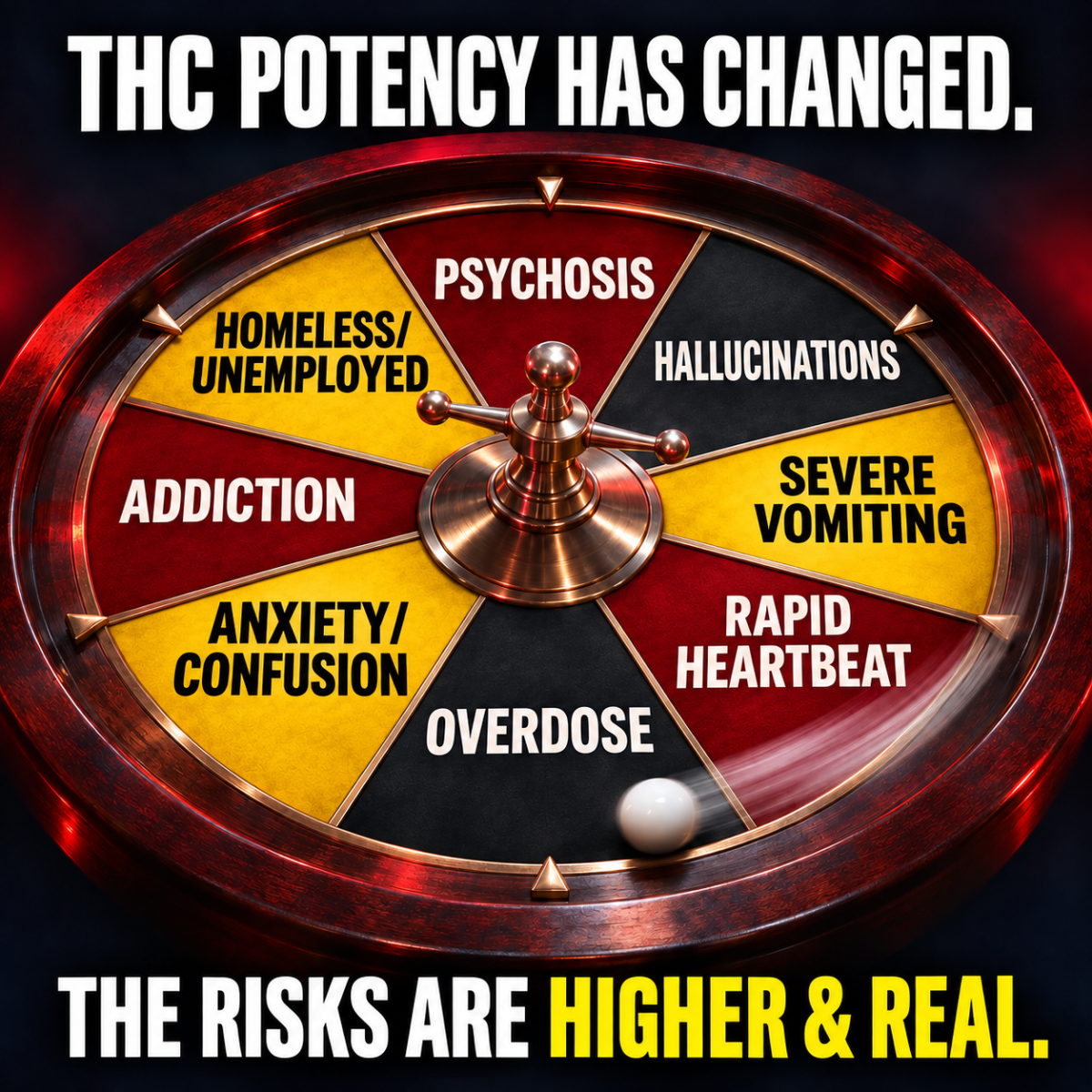
Today’s marijuana products are not the low-potency products many adults remember. Consumers now encounter high-THC flower, concentrated oils, vape cartridges, waxes, “dabs,” beverages, and edibles—often marketed with appealing flavors, colorful packaging, and claims about relaxation, energy, focus, or wellness.
No2Pot provides families, community leaders, policymakers, and educators with reliable information about marijuana potency, impairment, youth exposure, public safety, and the difference between an FDA-approved medicine and a commercially sold marijuana product.
Product Labels Do Not Predict the Effects
Marijuana is commonly marketed as:
- Indica: promoted as relaxing or sedating.
- Sativa: promoted as energizing or mentally stimulating.
- Hybrid: marketed as a combination of the two.
These labels should not be treated as scientific classifications or reliable predictions of how a product will affect someone. Research has found that products labeled Indica, Sativa, and Hybrid do not consistently correspond to distinct chemical profiles. Effects can vary according to THC concentration, other cannabinoids, method of use, dose, individual tolerance, and whether alcohol or other drugs are also used. pmc.ncbi.nlm.nih.gov
Names such as “Green Crack,” “Jack the Ripper,” “Kush,” and similar terms are primarily marketing or strain names. They do not establish a standardized potency, composition, safety level, or medical effect.
Marijuana Products Come in Many Forms
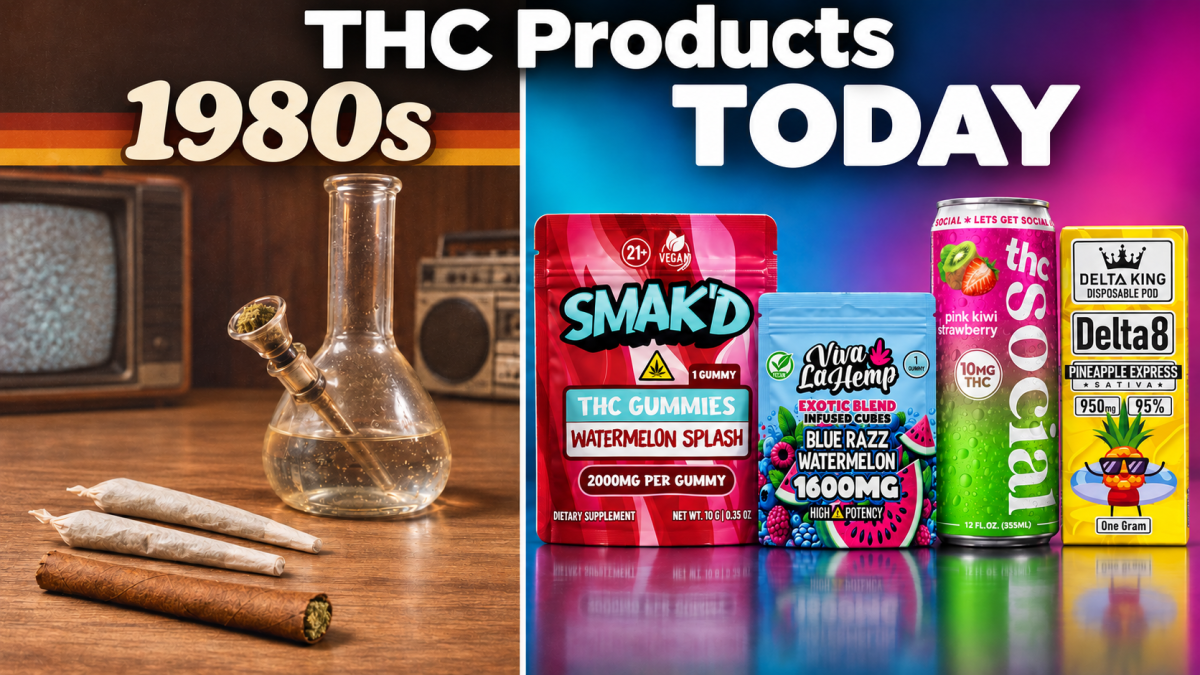
- Flower: dried cannabis plant material that is usually smoked.
- Vapes: concentrated THC oils inhaled through electronic devices.
- Edibles and beverages: THC-infused candy, baked goods, drinks, and other foods.
- Concentrates: highly potent THC products—including wax, shatter, oils, and dabs—that may be smoked or vaporized.
Marijuana concentrates can contain substantially more THC than plant material and can deliver a large amount rapidly. Higher THC exposure is associated with increased risks of anxiety, agitation, paranoia, psychosis, dependence, and addiction. nida.nih.gov
Medical Marijuana Is Not the Same as an FDA-Approved Medicine
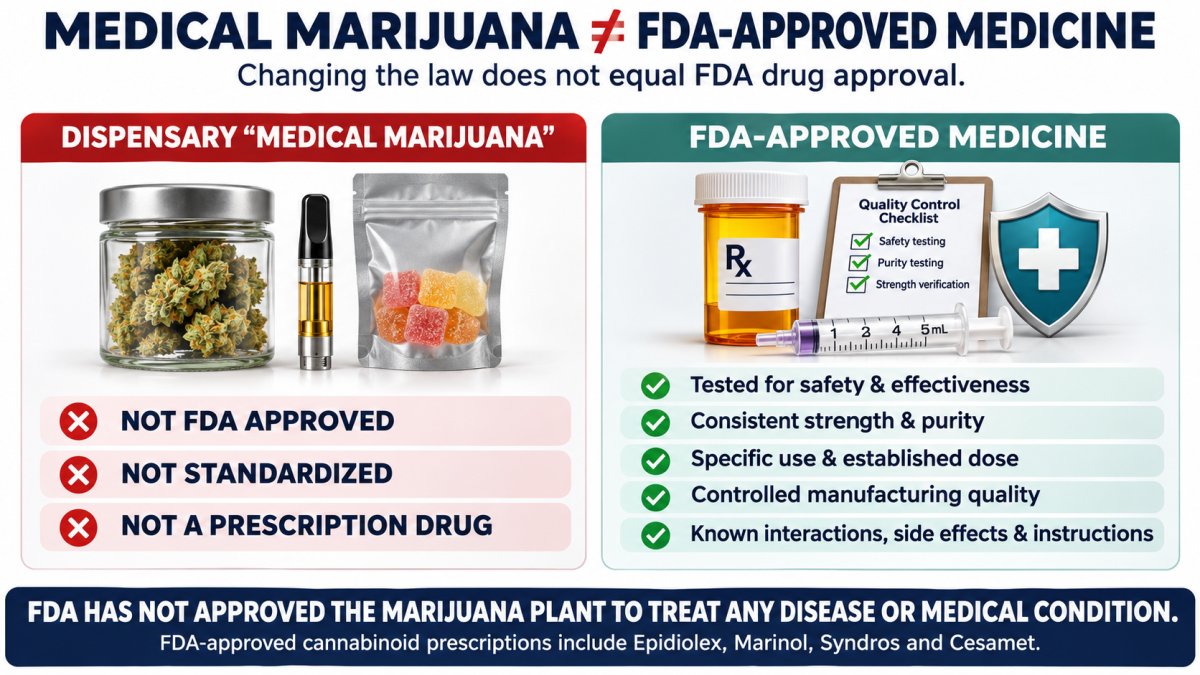
Changing marijuana laws does not transform a plant or commercial product into a standardized medication.
FDA-approved medicines must be evaluated for:
- Safety and effectiveness
- Consistent strength and purity
- Specific medical uses
- Accurate dosing
- Manufacturing quality
- Known interactions and side effects
- Instructions for patients and healthcare providers
A product called “medical marijuana” and sold in dispensaries or vape shops has NOT completed the FDA drug-approval process and is NOT a PRESCRIPTION.
he FDA has not approved the marijuana plant to treat any disease or medical condition. It has approved a limited number of specific cannabinoid medications, including Epidiolex, Marinol, Syndros, and Cesamet. These prescription products have defined ingredients, controlled manufacturing, established doses, and approved medical indications. FDA
Marijuana and Driving Do Not Mix
Cannabis can affect the brain functions needed for safe driving. It may:
- Slow reaction time and decision-making
- Impair coordination
- Distort perception
- Reduce attention and the ability to multitask
- Affect lane control and distance judgment
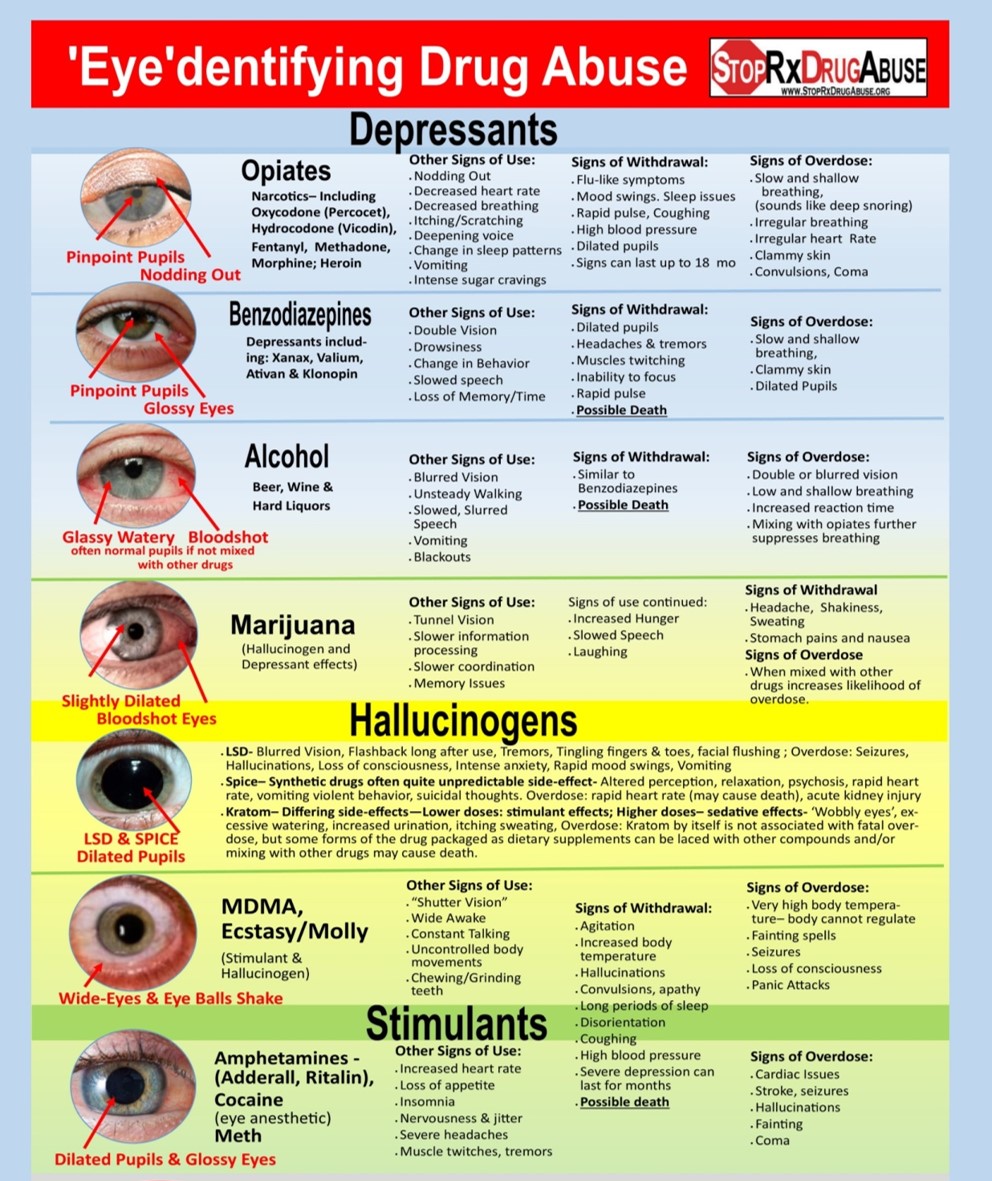
A driver may feel focused while still being impaired. Unlike alcohol, the amount of THC detected in a person’s body does not consistently indicate that person’s degree of impairment. Combining marijuana with alcohol or another drug can increase impairment. CDC
You do not have to use marijuana to become a victim of marijuana-impaired driving.
Important Facts to Consider
-
Youth are especially vulnerable.
The brain continues developing until approximately age 25. Cannabis can affect attention, memory, learning, coordination, decision-making, and reaction time. CDC -
Smoking is not harmless.
Marijuana smoke exposes users and bystanders to smoke and potentially harmful chemicals. -
Potency and dosing can vary.
Products differ in THC concentration, serving size, formulation, and how quickly their effects begin. -
Edibles create additional risks.
Delayed effects can lead people to consume more THC before the first dose has taken full effect. Products resembling candy may also attract children. -
Concentrates can deliver extremely high THC exposure.
Wax, shatter, oils, and dabs are substantially more potent than traditional marijuana flower. -
Marijuana can impair driving.
Legal availability does not make driving after use safe or lawful. -
Mixing substances increases the danger.
Combining marijuana with alcohol, sedatives, prescription medications, or other drugs can intensify impairment and unpredictable effects. -
FDA-approved cannabinoid medicines already exist.
These medications are different from dispensary products because they have standardized ingredients, approved uses, dosing information, and manufacturing controls.
Legal Does Not Mean Harmless
Alcohol, tobacco, and prescription drugs demonstrate that regulation does not eliminate addiction, impaired driving, underage access, family harm, or public expense.
Before expanding commercial marijuana availability, communities should consider:
- Youth use and accidental exposure
- High-potency products
- Drug-impaired driving
- Addiction and mental-health consequences
- Workplace and school safety
- Advertising and deceptive packaging
- Secondhand smoke
- Enforcement and regulatory costs
Public policy should be based on evidence—not industry marketing, political slogans, or promises that every marijuana product is medicine.
Protect Children. Protect Drivers. Protect Communities.
No2Pot supports prevention, responsible public policy, accurate education, and FDA-reviewed standards for medicines.
Marijuana has changed. Our understanding of the risks must change with it.

Trying to reduce opioid overdoses while legalizing marijuana is similar to putting kerosine on a fire and expecting the fire to go out!.
Marijuana legalization and Opioid Overdoses
 Click here to Print the Page
How to get a medical marijuana card... however it is NOT A PRESCRIPTION!!!
For Free Community Presentations
Teresa- DontBeDoped@gmail.com

Excellent Information Including Action Alerts
Tell Your Children


National Highway Traffic Safety Administration

Medical Associations

Research & Studies
Pages

Let's Be Bunt Pot is NOT Medicine.

Opioids, Marijuana, Pregnancy
About Us
No2pot is a group of volunteers striving to keep our communities safe and drug free. We are parents who don't believe that marijuana should be promoted as a miracle drug against all medical warnings and advise. There is absolutely no way to regulate a drug that can be grown in a someone's backyard.
"We support marijuana to be treated as all other medicines. To be a legitimate medicine it must go through the rigorous FDA procedures to be properly tested and establish guidelines for usage. Marinol and several other cannabis medicines available in prescription form were approved by the FDA several years ago. Legalizing marijuana via legislation or popular vote circumvents all warnings by every medical association that pro-marijuana organizations purport marijuana cures or assists in treating to include the American Epilepsy Society, American Cancer Society, American Glaucoma Society etc. Our goal is to educate the TRUTH and protect our children, families, highways and businesses from the deceitful promotion that marijuana is a 'miracle medicine.'
Disclaimer- We receive no money or funds from any organization, foundation or individual.